
Bitcoin Basics: What Is BTC & How It Works
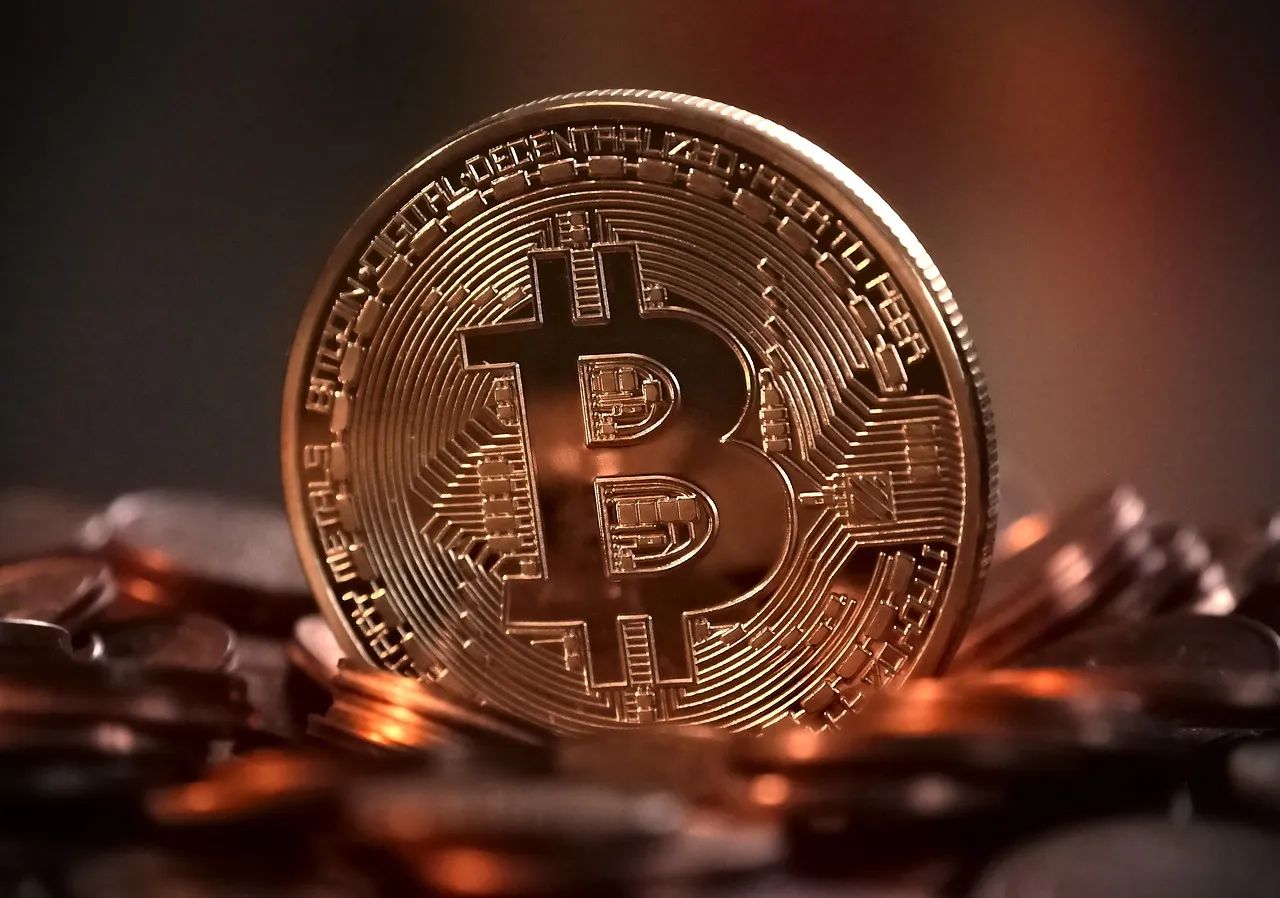
Bitcoin is a digital currency with a fixed supply. No government issues it. No bank controls it. Anyone with internet access can send or receive it — 24 hours a day, 7 days a week, anywhere in the world. That's a genuinely new idea.
This guide explains what Bitcoin is, how it works, and why it matters. No technical background needed.
What Is Bitcoin?
Bitcoin (BTC) is a digital form of money. It was invented in 2008 by an anonymous person (or group) using the name Satoshi Nakamoto. The first Bitcoin transaction happened on January 3, 2009.
What makes Bitcoin different from the euro or dollar? Three things:
- Fixed supply. Only 21 million Bitcoin will ever exist. No central bank can print more.
- No middleman. You can send Bitcoin directly to anyone. No bank, no PayPal, no permission needed.
- Decentralized. Thousands of computers worldwide maintain Bitcoin. No single company or government runs it.
Think of Bitcoin as internet-native money — money that belongs to the internet itself, not to any one country.
How Does Bitcoin Work?
The Blockchain
Every Bitcoin transaction is recorded on a public ledger called the blockchain. This ledger is shared across thousands of computers worldwide. Nobody owns it. Everyone can read it.
Here's how a transaction works:
- You send 0.01 BTC to a friend.
- Your transaction is broadcast to the Bitcoin network.
- Miners verify it and include it in a new "block" of transactions.
- That block is added to the chain permanently.
Once a transaction is confirmed, it cannot be reversed or altered. This is what makes Bitcoin trustworthy without a bank.
Mining: Who Confirms Transactions?
Bitcoin miners are computers that compete to process transactions. They solve a complex mathematical puzzle. The first miner to solve it adds the next block and earns a Bitcoin reward. This process is called Proof of Work.
Mining serves two purposes. First, it confirms transactions securely. Second, it creates new Bitcoin — but only at a predictable, slow rate.
The 21 Million Cap and the Halving
Bitcoin's most important property is its fixed supply of 21 million coins. About 19.8 million have already been mined. The remaining ~1.2 million will be released slowly over the next century.
Every four years, the Bitcoin reward for miners is cut in half. This event is called the halving. It makes Bitcoin increasingly scarce over time.
| Halving | Year | New BTC per block | Annual inflation rate |
|---|---|---|---|
| Launch | 2009 | 50 BTC | ~25% |
| 1st | 2012 | 25 BTC | ~12% |
| 2nd | 2016 | 12.5 BTC | ~4.2% |
| 3rd | 2020 | 6.25 BTC | ~1.8% |
| 4th | 2024 | 3.125 BTC | ~0.85% |
After the 2024 halving, Bitcoin's inflation rate dropped below 1%. That's lower than gold. No central bank has ever offered that kind of supply certainty.
Why Does Bitcoin Have Value?
New users often ask: why does Bitcoin have value if you can't hold it physically?
The honest answer is that money has value because people agree it does. The dollar has value because millions of people accept it. Bitcoin's value comes from the same source — but with additional properties that traditional money lacks:
Scarcity. There will only ever be 21 million Bitcoin. Scarcity creates value. Gold is valuable partly because it's rare. Bitcoin is rarer — and its scarcity is mathematically guaranteed.
Utility. You can send $10,000 worth of Bitcoin to someone in Argentina in minutes for a few dollars in fees. Try that with a wire transfer.
Security. Bitcoin's network has never been hacked. In 15+ years of operation, not a single Bitcoin was stolen from the blockchain itself (exchange hacks are different and involve human error).
Censorship resistance. No authority can freeze your Bitcoin wallet or block a transaction. Your Bitcoin is yours alone.
What Can You Do With Bitcoin?
Store value. Many people hold Bitcoin as a long-term savings asset — often called "digital gold." Bitcoin has outperformed every major asset class over 4-year periods in its history.
Send money internationally. Bitcoin crosses borders instantly, without bank fees or conversion delays.
Save for retirement. Tools like our Bitcoin Retirement Calculator can show you how much Bitcoin you'd need to reach financial freedom — and when.
Pay for goods and services. Thousands of businesses worldwide accept Bitcoin directly.
How Is Bitcoin Different From Other Cryptocurrencies?
There are thousands of cryptocurrencies. Bitcoin is different for several reasons.
First, it was the original. Bitcoin established the core concepts that all others borrowed from.
Second, Bitcoin is the most decentralized. No company, foundation, or individual controls Bitcoin's development. Ethereum, Solana, and most others have a core team or company with significant influence.
Third, Bitcoin has the longest track record. Launched in 2009, Bitcoin has survived multiple crashes, government bans, and exchange collapses. Every other cryptocurrency is newer and less tested.
Many investors focus on Bitcoin specifically because of this — it's the one cryptocurrency with a genuinely fixed supply, no leadership, and 15+ years of proven resilience.
Key Risks to Understand
Bitcoin is not risk-free. Before investing, you should understand these risks honestly.
Price volatility. Bitcoin can lose 50–80% of its value in a bear market. It has also recovered from every crash in history — but recovery can take 1–3 years. Only invest money you can afford to leave untouched for several years.
Storage risk. Unlike a bank, Bitcoin has no customer service. If you lose access to your wallet and your backup, your Bitcoin is gone permanently. Use a reputable exchange or hardware wallet.
Regulatory risk. Governments can restrict or regulate Bitcoin. Most major economies have accepted it, but rules are still evolving.
No yield. Unlike stocks (dividends) or real estate (rent), Bitcoin does not produce income. Its value comes purely from price appreciation.
How to Buy Your First Bitcoin
Getting started is simpler than most people expect.
- Choose a reputable exchange. Coinbase, Kraken, and Bitstamp are well-established options for beginners.
- Create an account and verify your identity. Exchanges require ID verification (KYC). This takes 10–30 minutes.
- Buy a small amount. You do not need to buy a whole Bitcoin. You can start with $10 or €10. The smallest unit is a satoshi: 0.00000001 BTC.
- Consider dollar-cost averaging (DCA). Buying a fixed amount weekly or monthly removes the stress of timing the market.
- Store it safely. For amounts over $1,000, move your Bitcoin to a hardware wallet rather than leaving it on an exchange.
Read our full guide on how to buy Bitcoin for a step-by-step walkthrough.
Frequently Asked Questions
Is Bitcoin real money?
Bitcoin is money in the practical sense: it's a medium of exchange, a store of value, and a unit of account. It is legal to own in most countries. El Salvador and the Central African Republic have made it legal tender. Most countries treat it as a taxable asset similar to gold or stocks.
Can Bitcoin be hacked?
The Bitcoin blockchain itself has never been hacked. Hacks in crypto news typically involve exchanges, which are companies — not the Bitcoin network itself. Using a reputable exchange and a hardware wallet protects you from the most common security risks.
How many people own Bitcoin?
Estimates vary, but roughly 300–400 million people worldwide held Bitcoin in some form by 2025. Institutional adoption — including BlackRock's Bitcoin ETF crossing $50 billion in assets — has accelerated significantly since 2024.
Will Bitcoin replace traditional money?
Most likely not entirely — at least not soon. Bitcoin is more likely to become a parallel monetary system and global savings asset, coexisting with national currencies rather than replacing them. Many economists compare it to digital gold rather than a replacement for day-to-day currency.
This article is for educational purposes only. It is not financial advice. Bitcoin is a volatile asset. Only invest what you can afford to lose.
👉 Use our Bitcoin Retirement Calculator to see when your Bitcoin savings could reach financial freedom
Related Articles

Bitcoin Technology: Blockchain & Mining
A deep dive into the technical foundations of Bitcoin, from blockchain technology to the mining process.

Bitcoin in 2030: Price Predictions
How much could a single Bitcoin be worth by 2030? We analyze four leading prediction models — Power Law, Stock-to-Flow, Rainbow Chart, and Conservative — to explore realistic price scenarios.
Bitcoin in 2040: Price Scenarios
Could Bitcoin reach $1 million or more by 2040? We use four proven prediction models to explore where the price of 1 BTC might be headed in the next 14 years.