
How to Buy Bitcoin: Guide for Beginners
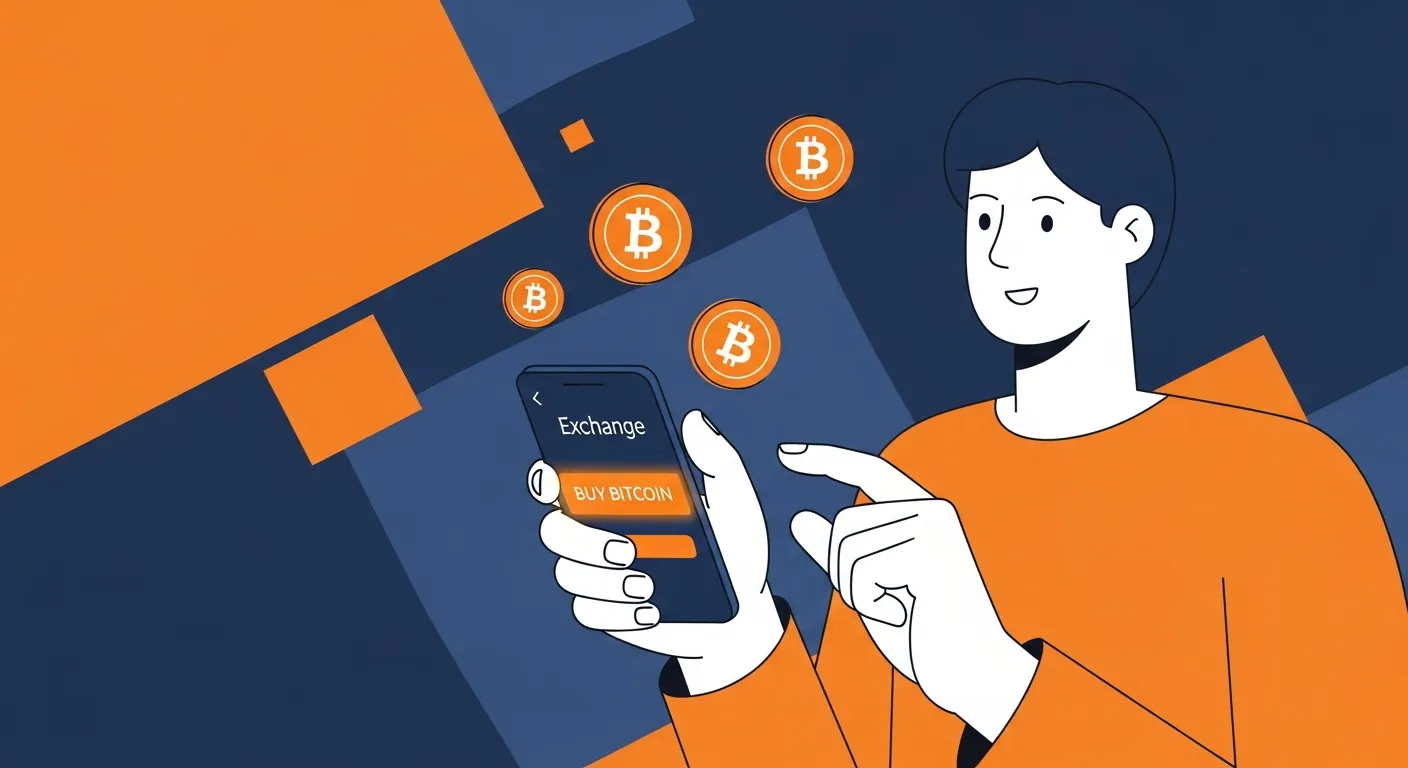
Buying Bitcoin for the first time can feel overwhelming. Between exchanges, wallets, private keys, and security best practices, there is a lot to take in. This guide walks you through the entire process step by step — from zero to your first satoshis.
Step 1: Understand What You Are Buying
Before spending a single dollar, make sure you understand the basics:
- Bitcoin (BTC) is a decentralized digital currency with a fixed supply of 21 million coins.
- You do not need to buy a whole Bitcoin. The smallest unit is called a satoshi (0.00000001 BTC). You can start with as little as $10.
- Bitcoin is not controlled by any government or company. It runs on a global network of computers.
- The price is volatile. It can drop 30% in a week and rise 100% in a month. Only invest what you can afford to lose.
Think of Bitcoin like digital real estate with a permanently limited supply. The earlier you buy, the fewer people own any — but there are no guarantees.
Step 2: Choose a Reputable Exchange
An exchange is the platform where you buy, sell, and sometimes store Bitcoin. For beginners, the most important criteria are security, ease of use, and fees.
Top Exchanges for Beginners
| Exchange | Pros | Cons |
|---|---|---|
| Coinbase | Beginner-friendly UI, insured, publicly traded | Higher fees on simple trades |
| Kraken | Low fees, strong security, long track record | Interface can be complex |
| Bitstamp | EU-regulated, simple, low fees | Smaller selection of coins |
| Strike | Zero or near-zero fees, DCA-friendly | Limited features beyond BTC |
| Swan Bitcoin | Built for Bitcoin-only DCA savers | US-focused |
What to Look For
- Regulation: Is the exchange licensed in your country?
- Insurance: Are customer funds insured against hacks?
- Fees: Compare trading fees (typically 0.1%–1.5%), deposit fees, and withdrawal fees.
- Reputation: How long has it been operating? Has it ever been hacked?
Step 3: Create and Verify Your Account
Every reputable exchange requires identity verification (KYC — Know Your Customer). Here is what you will need:
- Email address — use one with two-factor authentication enabled
- Government-issued ID — passport or driver's license
- Selfie or video verification — to match your ID
- Proof of address — sometimes required (utility bill, bank statement)
Verification typically takes a few minutes to 24 hours. Some exchanges offer instant verification through automated systems.
Security Setup (Do This Immediately)
- Enable two-factor authentication (2FA) using an authenticator app (Google Authenticator, Authy). Never use SMS-based 2FA — it can be SIM-swapped.
- Use a strong, unique password (16+ characters). Use a password manager.
- Set up withdrawal address whitelisting if available — this prevents hackers from sending your Bitcoin to their wallet even if they access your account.
Step 4: Deposit Funds
Most exchanges accept:
- Bank transfer (ACH/SEPA): Lowest fees (often free), but takes 1–3 days
- Debit/credit card: Instant but higher fees (2–4%)
- Wire transfer: Fast for large amounts, small fixed fee
Recommendation: Use a bank transfer for the lowest cost. If you are eager, a debit card works for small first purchases.
Step 5: Buy Bitcoin
Once your funds arrive, buying is straightforward:
- Navigate to the Buy or Trade section
- Select Bitcoin (BTC)
- Enter the amount in USD (or EUR)
- Review the total cost including fees
- Confirm your purchase
Market Order vs. Limit Order
- Market order: Buys immediately at the current price. Best for beginners.
- Limit order: Sets a maximum price you are willing to pay. The order only executes if the price drops to your level. Useful for getting a better entry point.
For your first purchase, a simple market order is perfectly fine.
Step 6: Understand Wallets and Self-Custody
When you buy Bitcoin on an exchange, the exchange holds it for you. This is called custodial storage. It is convenient but comes with risks — if the exchange gets hacked or goes bankrupt (see: FTX, Mt. Gox), you could lose your funds.
Types of Wallets
| Type | Security | Convenience | Best For |
|---|---|---|---|
| Exchange wallet | Medium | Very high | Small amounts, active trading |
| Software wallet (mobile/desktop) | Medium-high | High | Moderate amounts, daily use |
| Hardware wallet | Very high | Medium | Long-term storage, larger amounts |
| Paper wallet | High | Very low | Ultra-long-term cold storage |
Recommended Hardware Wallets
- Ledger Nano S Plus / Nano X — industry standard, Bluetooth option
- Trezor Model T / Safe 3 — open-source firmware, touchscreen
- Coldcard — Bitcoin-only, air-gapped, advanced security
- BitBox02 — Swiss-made, minimalist, Bitcoin-only edition available
The Golden Rule
"Not your keys, not your coins."
If you hold more than $500–$1,000 in Bitcoin, consider moving it to a hardware wallet. You will receive a seed phrase (12 or 24 words) — this is the master key to your Bitcoin. Write it down on paper (or stamp it into metal), store it in a safe place, and never share it with anyone or store it digitally.
Step 7: Set Up a Savings Plan (DCA)
Rather than trying to time the market, set up automatic recurring purchases:
- Weekly or monthly purchases of a fixed dollar amount
- This strategy is called Dollar Cost Averaging (DCA)
- It removes emotion from investing and smooths out volatility
- Historically, DCA into Bitcoin over any 4+ year period has been profitable
Most exchanges let you automate this. Set it and forget it.
Common Beginner Mistakes to Avoid
1. Investing More Than You Can Afford to Lose
Bitcoin is volatile. Never invest money you need for rent, food, or emergencies. A good rule: only invest what you would not panic about losing 50% of overnight.
2. Trying to Time the Market
Nobody consistently buys the bottom and sells the top. DCA outperforms market timing for the vast majority of investors.
3. Falling for Scams
- No legitimate person or company will double your Bitcoin. Ever.
- Nobody from customer support will DM you first. Those are scammers.
- Do not click links in emails or messages claiming your account is locked. Go directly to the exchange website.
- Never share your seed phrase — not with support, not with friends, not with anyone.
4. Panic Selling During Crashes
Bitcoin has dropped 50–85% multiple times in its history — and has always recovered to new highs. If your time horizon is 4+ years, drawdowns are opportunities, not disasters.
5. Overcomplicating It
You do not need to understand every technical detail of Bitcoin to benefit from it. Start small, learn as you go, and increase your position as your confidence grows.
Tax Considerations
In most countries, Bitcoin is treated as property for tax purposes:
- Buying Bitcoin is not a taxable event
- Selling Bitcoin for profit triggers capital gains tax
- Using Bitcoin to pay for goods also triggers capital gains tax
- Receiving Bitcoin as income is taxed as ordinary income
- Holding for 1+ years (in many jurisdictions) qualifies for lower long-term capital gains rates
Keep records of every purchase: date, amount, price, and fees. Many exchanges provide downloadable transaction histories. Consider using crypto tax software like CoinTracker or Koinly.
How Much Should You Invest?
There is no single right answer, but here are common guidelines:
- Conservative: 1–5% of your investment portfolio
- Moderate: 5–15% of your portfolio
- Aggressive: 15–30% of your portfolio
Many financial advisors now recommend a small Bitcoin allocation (1–5%) for diversification. As you learn more and gain conviction, you can adjust your allocation.
Quick Start Checklist
- Research and choose a reputable exchange
- Create an account and complete verification
- Enable two-factor authentication (authenticator app, not SMS)
- Deposit funds via bank transfer
- Make your first Bitcoin purchase
- Consider a hardware wallet for amounts over $1,000
- Set up automatic recurring purchases (DCA)
- Write down your seed phrase and store it safely
- Never share your seed phrase with anyone
- Hold for the long term and ignore short-term price swings
Conclusion
Buying your first Bitcoin is simpler than most people think. The hardest part is taking the first step. Start small — even $50 or $100 — to get comfortable with the process. Set up a regular savings plan, secure your holdings properly, and think in years, not days.
The best time to buy Bitcoin was 10 years ago. The second best time is today.
This article is for educational and informational purposes only and does not constitute financial advice. Bitcoin is a volatile asset and you can lose money. Always do your own research and consult a qualified financial advisor before investing.
Related Articles
Bitcoin Basics: What Is BTC & How It Works
A comprehensive guide for beginners about the fundamentals of Bitcoin, blockchain technology, and decentralized currencies.
Bitcoin Savings Plan: DCA Strategy
Learn how you can build long-term wealth with a Bitcoin savings plan through regular investments.

Bitcoin Retirement Planning: A Step-by-Step Guide
A practical, step-by-step guide to planning your retirement with Bitcoin. From setting your target number to building a savings plan and managing risks — everything you need to get started.