
Bitcoin Lightning Network Explained
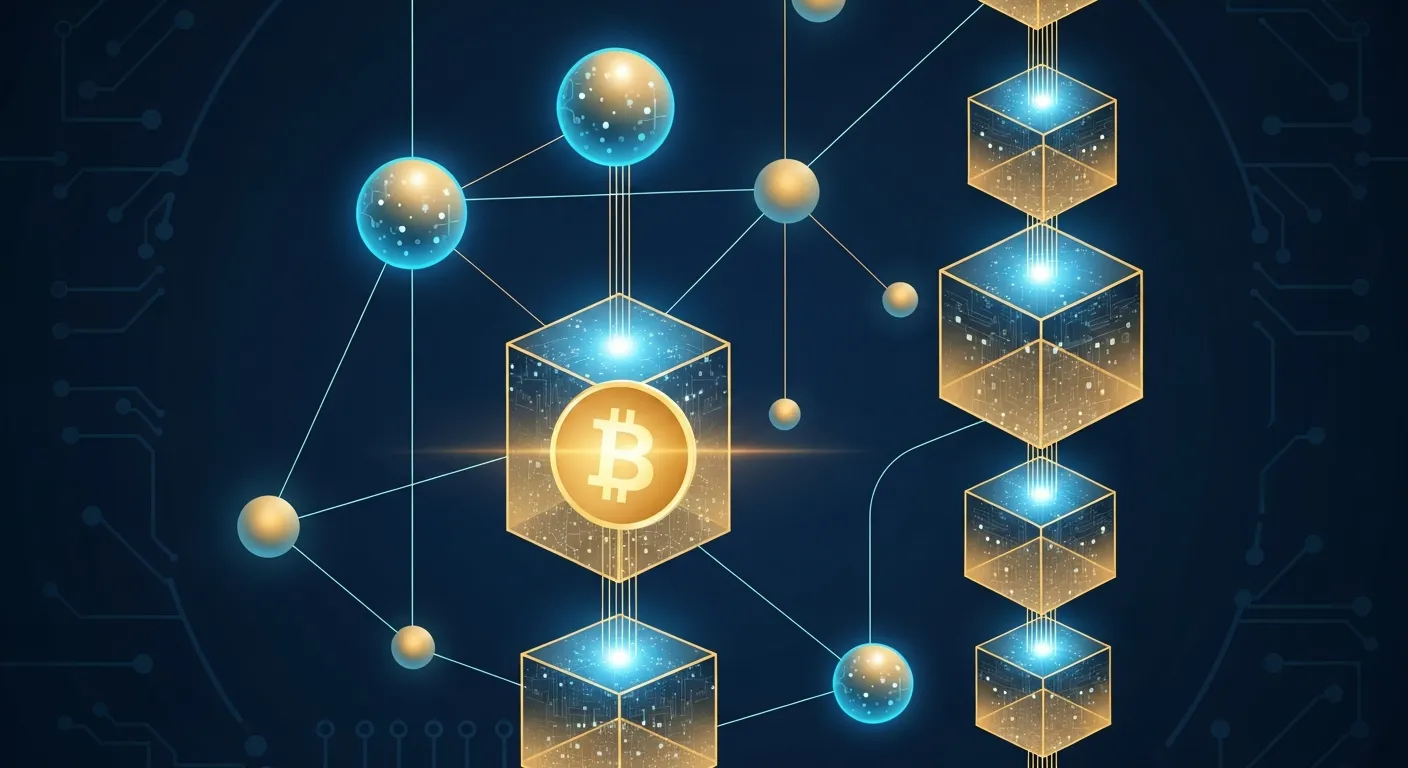
What Is the Lightning Network?
The Lightning Network is a second-layer protocol built on top of the Bitcoin blockchain that enables instant, nearly free transactions. While a standard Bitcoin transaction on the main blockchain (Layer 1) can take 10 minutes to an hour and cost several dollars in fees, the Lightning Network delivers:
- Instant settlement (under 1 second)
- Near-zero fees (often less than $0.01)
- Millions of transactions per second (theoretically)
- Micropayments (as small as 1 satoshi = 0.00000001 BTC)
For anyone considering Bitcoin as a long-term retirement asset, the Lightning Network is a crucial piece of the puzzle. A store of value that also functions as an efficient medium of exchange has a significantly higher utility — and therefore a higher potential price.
How Does the Lightning Network Work?
Payment Channels: The Core Concept
Imagine you and your local coffee shop open a shared "tab." Instead of recording every single coffee purchase on the Bitcoin blockchain (expensive and slow), you open a payment channel:
- Opening: You and the coffee shop lock Bitcoin into a multi-signature smart contract on the blockchain (1 Layer 1 transaction)
- Transacting: Every payment updates the balance within the channel — instantly, with no blockchain transaction. You can buy 100 coffees, and not a single on-chain transaction occurs
- Closing: When either party wants to close the channel, the final balance is settled on the blockchain (1 Layer 1 transaction)
Result: 100 payments, but only 2 blockchain transactions.
Routing: The Network Effect
The true genius of the Lightning Network is routing. You don't need a direct channel with every recipient. Instead, payments are routed through intermediate nodes:
Example: You → Node A → Node B → Recipient
This works similarly to the internet: your data packets don't travel directly but are routed through multiple servers. Each intermediate node can charge a tiny fee (typically under 0.001%), making the network economically self-sustaining.
Hash Time-Locked Contracts (HTLCs)
Routing security is guaranteed by Hash Time-Locked Contracts — cryptographic agreements that ensure:
- Payments either arrive completely or are fully refunded
- No intermediate node can steal funds
- All parties are cryptographically secured
- Transactions automatically cancel on timeout
Lightning Network by the Numbers (2026)
The Lightning Network has experienced explosive growth:
| Metric | 2021 | 2023 | 2026 (est.) |
|---|---|---|---|
| Network Capacity | ~2,000 BTC | ~5,500 BTC | ~8,000+ BTC |
| Public Channels | ~75,000 | ~70,000 | ~80,000+ |
| Public Nodes | ~15,000 | ~16,000 | ~20,000+ |
| Daily Transactions | ~50,000 | ~500,000 | ~2,000,000+ |
Important: These figures show only the public network. Private channels (not publicly announced) are estimated to make up 30–50% of total capacity.
Real-World Use Cases
Everyday Payments
The Lightning Network makes Bitcoin practical for daily use for the first time:
- In-store purchases: Scan a QR code and pay in 1 second — faster than a credit card
- Online shopping: No credit card details needed, no chargebacks, instant confirmation
- Peer-to-peer: Send money to friends and family in seconds, even across borders
- Tipping: Give content creators direct micropayments
Streaming Money (Value 4 Value)
One of Lightning's most revolutionary applications is streaming money:
- Podcasts: Listeners pay per minute/second of listening (so-called "Podcasting 2.0")
- Music: Artists get paid in real-time per song played — with no platform intermediaries taking 70%+ cuts
- Articles: Journalists can be paid per paragraph or per reading time
- Gaming: Players can earn and spend in real-time
International Remittances
For cross-border money transfers, Lightning is a game-changer:
| Method | Fees | Speed | Availability |
|---|---|---|---|
| Bank Wire (SWIFT) | $25–50 | 1–5 days | Mon–Fri, business hours |
| Western Union | 5–15% | Hours–Days | Limited |
| PayPal International | 3–5% | Instant–Days | Limited |
| Lightning Network | < $0.01 | < 1 second | 24/7/365 |
The World Bank estimates that global remittances total over $700 billion annually, with an average fee of 6.2%. Lightning could save migrant workers and their families tens of billions of dollars per year.
Lightning Network Adoption Around the World
El Salvador: The National Experiment
In September 2021, El Salvador became the first country to adopt Bitcoin as legal tender. The government's Chivo Wallet runs on Lightning, enabling:
- Tax payments via Lightning
- Salary payments via Lightning
- Retail purchases at over 20,000 merchants
The results have been mixed but instructive — Lightning works at scale, but user education remains critical.
United States
- Cash App: One of the largest payment apps (50M+ users) integrated Lightning in 2022
- Strike: Lightning-native payment platform processing billions in volume
- Bitcoin ATMs: Over 30,000 Bitcoin ATMs, many with Lightning support
- Regulatory clarity: The IRS treats Lightning transactions like regular Bitcoin transactions
Europe
- MiCA Regulation: The EU's Markets in Crypto-Assets framework provides clear legal standing for Lightning payments
- Switzerland (Lugano Plan B): The city of Lugano adopted Bitcoin and Lightning for municipal services
- Germany: Over 500 merchants accept Lightning payments; Berlin is considered Europe's "Bitcoin capital"
- Norway, Sweden: Progressive regulatory environments supporting Lightning adoption
Developing Nations
- Nigeria: Lightning usage surging as a hedge against naira devaluation
- Philippines: Growing remittance corridor using Lightning instead of traditional services
- Brazil: Lightning integration in popular payment platforms
- India: Emerging Lightning ecosystem despite regulatory uncertainty
Lightning Wallets: Getting Started
For Beginners
| Wallet | Platform | Custodial? | Best For |
|---|---|---|---|
| Wallet of Satoshi | iOS, Android | Yes | Simplest experience |
| Strike | iOS, Android | Yes | Bank-to-Lightning |
| Blink | iOS, Android | Yes | Stable USD balance option |
| Phoenix | iOS, Android | No (Self-Custody) | Auto channel management |
For Advanced Users
| Wallet | Platform | Custodial? | Best For |
|---|---|---|---|
| Breez | iOS, Android | No | Point-of-sale function |
| Zeus | iOS, Android | No | Own node connection |
| Alby | Browser Extension | No | Web integration, Nostr |
Running Your Own Node
For long-term investors managing larger amounts over Lightning, running a personal Lightning node offers maximum sovereignty:
- Umbrel: User-friendly node OS for Raspberry Pi or mini-PC
- Start9: Privacy-focused node platform
- RaspiBlitz: Open-source Lightning node for Raspberry Pi
- myNode: Beginner-friendly plug-and-play node
How Lightning Affects Bitcoin's Price
The Utility Premium
The Lightning Network dramatically expands Bitcoin's utility value. A Bitcoin that functions both as a store of value (digital gold) and an efficient medium of exchange commands a higher network value:
- More users: Lightning makes Bitcoin accessible to billions who were previously deterred by high fees and slow transactions
- More use cases: Micropayments, streaming money, and IoT payments open entirely new markets
- Velocity effect: Faster transactions mean more economic activity on the Bitcoin network
- Institutional adoption: Companies integrating Lightning strengthen Bitcoin infrastructure
Impact on Your Retirement Planning
For investors using Bitcoin as a long-term retirement vehicle, Lightning is a positive development:
- Stronger investment thesis: Bitcoin as payment method + store of value = higher utility
- Flexibility in retirement: You can spend Bitcoin directly via Lightning instead of converting to fiat
- Decentralized withdrawals: The 4% rule could be implemented through Lightning-based spending rather than selling on exchanges
Price Impact Estimates
Several analysts have modeled the potential price impact of full Lightning adoption:
| Scenario | Additional Users | Estimated Price Impact |
|---|---|---|
| Lightning replaces 5% of remittances | ~50 million | +$50,000–100,000/BTC |
| Lightning captures 1% of global payments | ~500 million | +$200,000–500,000/BTC |
| Lightning becomes primary micropayment rail | ~1 billion+ | +$500,000–1,000,000/BTC |
These are speculative estimates, but they illustrate the massive untapped market that Lightning addresses.
Technical Challenges and Solutions
Current Limitations
No technology is perfect. Lightning faces several challenges:
- Liquidity management: Channels need sufficient balance on both sides to route payments
- Online requirement: Both parties must be online to transact (unlike on-chain Bitcoin)
- Channel capacity: Individual channels have maximum capacity limits
- Routing complexity: Finding optimal payment routes becomes harder as the network grows
- User experience: Setting up channels is still complex for non-technical users
How These Are Being Solved
| Challenge | Solution | Status |
|---|---|---|
| Liquidity | Liquidity Service Providers (LSPs) | Deployed |
| Online requirement | Watchtowers (third-party monitors) | Deployed |
| Channel capacity | Multi-path payments (splitting across routes) | Deployed |
| Routing | Trampoline routing, pathfinding improvements | In progress |
| User experience | Non-custodial wallets with auto-management | Deployed |
Frequently Asked Questions (FAQ)
What is the Lightning Network in simple terms?
The Lightning Network is an extension of Bitcoin that enables fast and cheap payments. Instead of processing every transaction on the blockchain, payments are handled in separate "channels" and only the final result is recorded on the blockchain. Think of it like running a tab at a bar instead of paying separately for each drink.
Is the Lightning Network safe?
Yes. The Lightning Network uses the same cryptographic security as the Bitcoin blockchain. Hash Time-Locked Contracts (HTLCs) ensure no party can be cheated. However, Lightning is designed for everyday-sized transactions — for large amounts, the main blockchain remains the appropriate choice.
How much does a Lightning transaction cost?
Typically under 1 cent, often under $0.001. Fees depend on the route and network congestion, but even at peak times they're minimal compared to on-chain transactions or traditional payment processors (which charge 2–3%).
Can I use my existing Bitcoin on Lightning?
Yes, you can transfer Bitcoin from your regular wallet to a Lightning wallet. Some wallets (like Phoenix) handle this automatically. For long-term holdings, we still recommend secure hardware wallet storage and only keeping smaller amounts in Lightning.
Does Lightning work with the Bitcoin ETFs?
Not directly. Bitcoin ETFs hold Bitcoin on-chain in custodial wallets. However, Lightning benefits from ETF adoption indirectly — as more institutions invest in Bitcoin, the underlying network (including Lightning) becomes more valuable and better supported.
What happens if the Lightning Network goes down?
The Lightning Network is decentralized — it can't "go down" completely. Individual nodes may go offline, but the network automatically finds alternative routes. If a channel partner goes permanently offline, you can unilaterally close your channel on the blockchain and recover your Bitcoin.
Conclusion: Lightning as Bitcoin's Killer App
The Lightning Network isn't a future promise — it works today, is used by millions worldwide, and is growing rapidly. For Bitcoin investors and retirement planners, Lightning has three key implications:
- Stronger investment thesis: Bitcoin becomes both a store of value and a medium of exchange simultaneously
- Practical utility: You can use Bitcoin in everyday life — from coffee shops to online purchases to international transfers
- Future-proof scalability: Lightning solves Bitcoin's scaling challenge and prepares it for billions of users
If you believe Bitcoin will reach $1 million or beyond, the Lightning Network is one of the most important catalysts on that journey.
Use our Bitcoin Retirement Calculator to see when your Bitcoin investment could set you financially free — and start building your position today.
Disclaimer: This article is for educational and informational purposes only. This is not financial advice. Only invest money you can afford to lose.
Related Articles

Bitcoin Basics: What Is BTC & How It Works
A comprehensive guide for beginners about the fundamentals of Bitcoin, blockchain technology, and decentralized currencies.

Bitcoin Technology: Blockchain & Mining
A deep dive into the technical foundations of Bitcoin, from blockchain technology to the mining process.
Quantum Computing & Bitcoin: The Risk?
Could quantum computers break Bitcoin? Explore the real risks, timelines, cryptographic realities, and why Bitcoin can adapt long before quantum threats become practical.